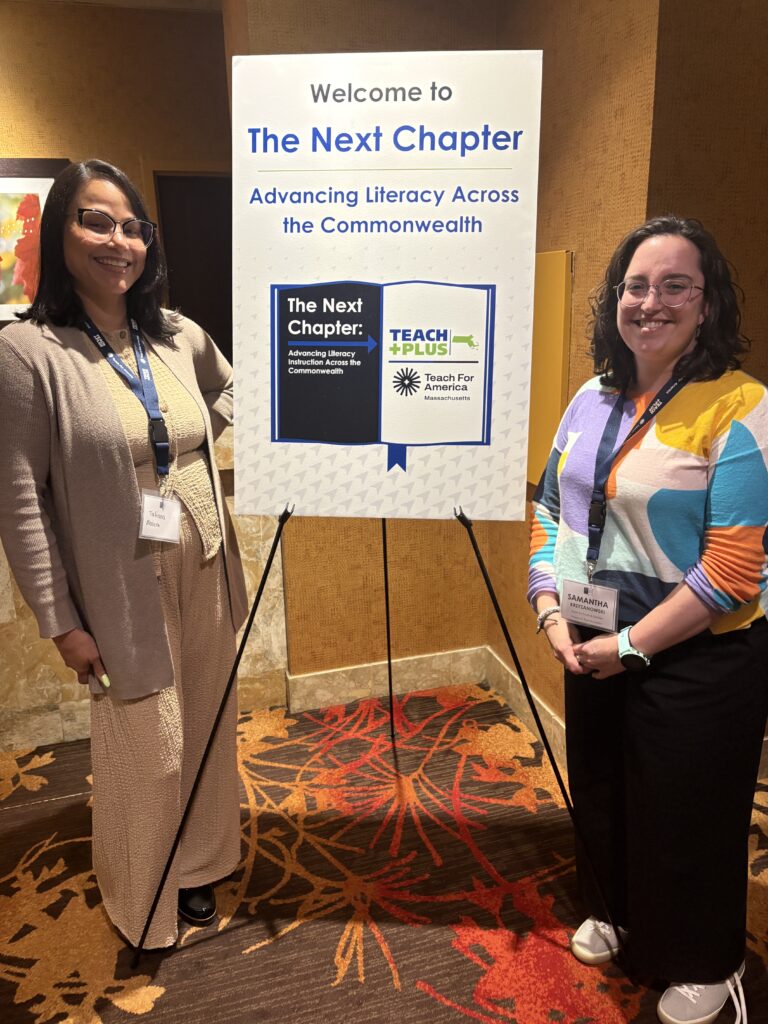
On April 10, 2026, Sami (Director of Literacy) and Tatiana (Family Engagement Specialist) had the privilege of attending The Next Chapter conference, hosted by Teach Plus and Teach for America Massachusetts and funded by the Davis Foundation.
Walking into a room filled with passionate teachers, administrators, non-profit leaders, and state representatives—right here in Springfield, MA—felt both energizing and hopeful. Everyone was gathered to discuss the next chapter in reading instruction, and the sense of shared purpose was inspiring.
Massachusetts is one of the last states in the nation to require schools to teach using evidence-based reading instruction and curricula, with the goal of ensuring that every third grader in the state is a proficient reader. There are 40 states who are ahead of us, it’s time for us to join the party!
Right now, 4 in 10 Massachusetts third graders are reading behind grade level. This is more than worrisome; it is a crisis. When a student does not gain proficiency in their reading skills, they struggle each year to catch up and to acquire knowledge across all their courses, not just reading and English Language Arts. Reading is a right, and it leads to freedom for a student. When young people learn to read confidently, they gain access to knowledge, opportunity, and the ability to make choices about their future. I often think of the relief and pride on a student’s face when they realize, “I can do this.”
This is at the heart of Hope Literacy’s mission: to walk alongside students in grades 6-12 as they discover their reading potential. We partner with middle and high schoolers through after-school and summer programs, as well as school-day partnerships, to help them move closer to grade level. Unlike many programs, Hope Literacy is culturally responsive and age-appropriate, while also focusing on the foundational skills. We celebrate each milestone, no matter how small, and meet every student where they are.
Hope Literacy uses the science of reading across all its methods, an evidence-based instructional model. The Science of Reading is research that explains how children’s brains learn to read and what teaching methods work best. It shows that reading doesn’t develop naturally for most kids and must be taught step by step, starting with learning how letters connect to sounds. Children need practice sounding out words, building vocabulary, and understanding what they read. When these skills are taught clearly and systematically, most children can become confident readers.
The Science of Reading is not a new body of research; it was overlooked when teachers and publishers brought forward a non-evidence-based model. The shift to the science of reading aims to make reading instruction more consistent, more inclusive, and more effective for ALL learners.
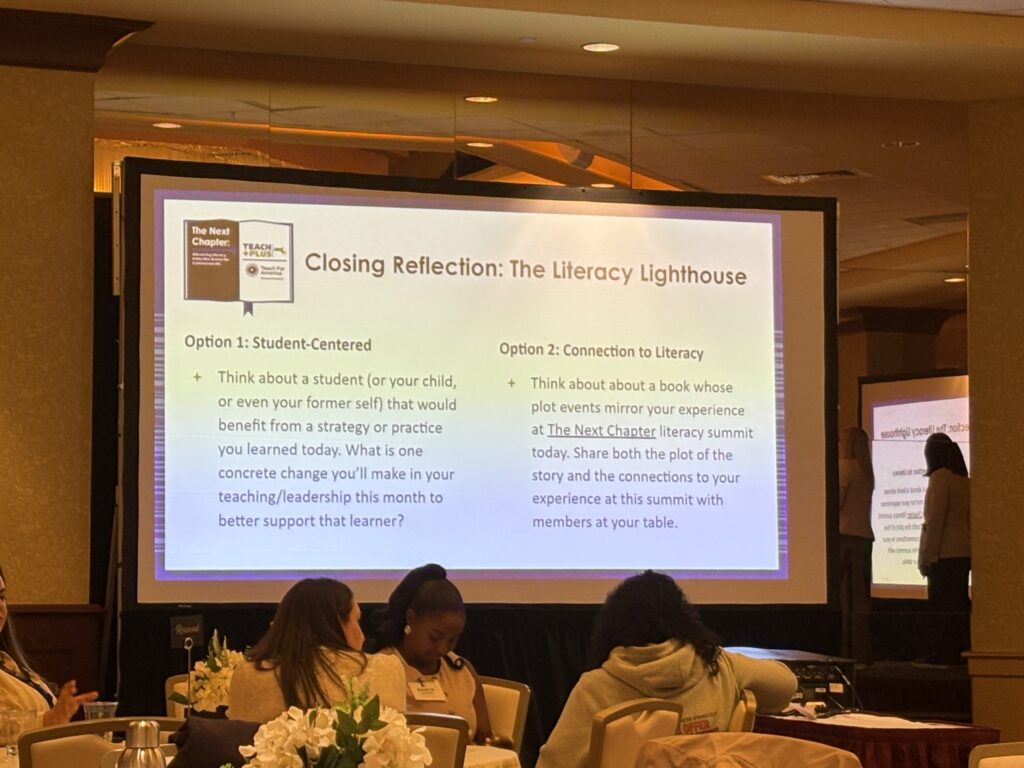
Attending the conference was refreshing and uplifting. It’s easy to feel discouraged by the scale of the problem, but being surrounded by educators who truly care—and who are committed to using evidence-based approaches—reminded us that we’re not alone in this work. There is so much hope and possibility when we come together for our kids.
If you know a student who could benefit, or if you want to learn more about how you can support Hope Literacy, we’d love to connect with you. Our programming is always free, and every new connection brings us closer to ensuring that every child has the chance to read with confidence. Call us at 413-285-8886 or email sami@hyff.org—we can’t wait to hear from you!